Leading Through Change
Visualization
Leader
Change
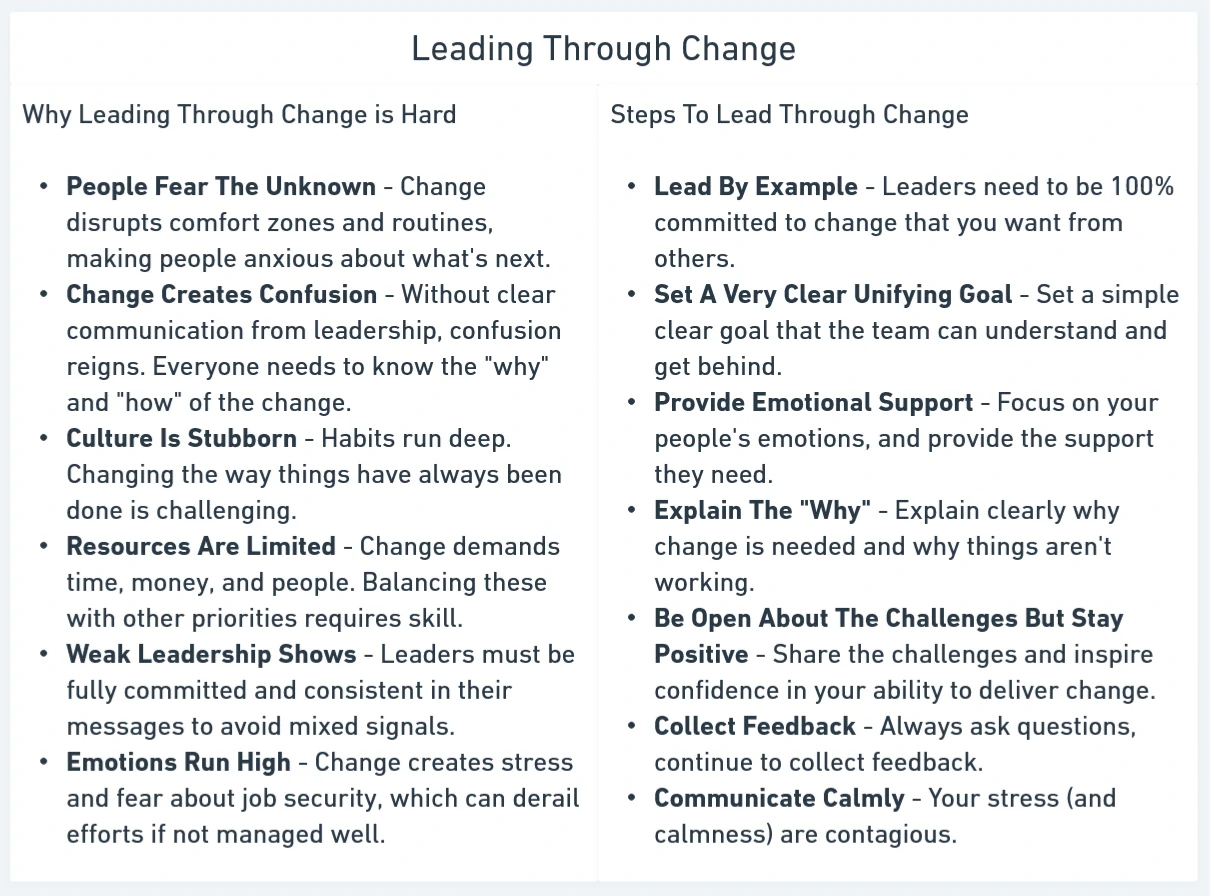
Why Leading Through Change is Hard
- People Fear The Unknown - Change disrupts comfort zones and routines, making people anxious about what’s next.
- Change Creates Confusion - Without clear communication from leadership, confusion reigns. Everyone needs to know the “why” and “how” of the change.
- Culture Is Stubborn - Habits run deep. Changing the way things have always been done is challenging.
- Resources Are Limited - Change demands time, money, and people. Balancing these with other priorities requires skill.
- Weak Leadership Shows - Leaders must be fully committed and consistent in their messages to avoid mixed signals.
- Emotions Run High - Change creates stress and fear about job security, which can derail efforts if not managed well.
Steps To Lead Through Change
- Lead By Example - Leaders need to be 100% committed to change that you want from others.
- Set A Very Clear Unifying Goal - Set a simple clear goal that the team can understand and get behind.
- Provide Emotional Support - Focus on your people’s emotions, and provide the support they need.
- Explain The “Why” - Explain clearly why change is needed and why things aren’t working.
- Be Open About The Challenges But Stay Positive - Share the challenges and inspire confidence in your ability to deliver change.
- Collect Feedback - Always ask questions, continue to collect feedback.
- Communicate Calmly - Your stress (and calmness) are contagious.
Use Cases
- When Someone Says, “This Won’t Work”
- X Don’t: Shut them down
- ✓ Do: Ask, “What part feels risky to you?”
- Pushback often signals perceived risk, not defiance.
- When Someone Pushes Back Immediately
- X Don’t: Argue or rush to explain
- ✓ Do: Say, “That’s a fair concern. Let’s unpack it together.”
- Feeling dismissed activates the brain’s threat response.
- When You First Announce the Change
- X Don’t: Start with timelines and business goals
- ✓ Do: Start with what it means for them - clarity, growth, less stress
- If it doesn’t feel personally relevant, the brain deprioritizes it.
- When You Feel Defensive
- X Don’t: Talk over people or double down
- ✓ Do: Pause. Ask, “What’s unclear or concerning right now?”
- Calm questions reduce threat perception and invite openness.
- When a Key Team Member Goes Quiet
- X Don’t: Assume silence means agreement
- ✓ Do: Ask privately, “What’s your honest take on this?”
- Silence often reflects low psychological safety, not support.
- When Team Energy Drops
- X Don’t: Pretend everything’s fine
- ✓ Do: Say, “This change is hard, and that’s normal.”
- Naming emotions reduces brain reactivity and helps people process.
- When Sharing the Plan
- X Don’t: Overwhelm with jargon or slides
- ✓ Do: Be clear, “Here’s what’s changing and why it matters.”
- Ambiguity increases anxiety and slows decision-making.
- When People Go Quietly Passive
- X Don’t: Call them out publicly
- ✓ Do: Follow up one-on-one and offer a clear next step
- Small wins release dopamine and build momentum.
- When You Want Long-Term Buy-In
- X Don’t: Treat it like a one- time announcement
- ✓ Do: Repeat the “why” and show visible progress
- Repetition and short-term wins reinforce belief and drive habit formation.