How to Prioritize Tasks
Visualization
Leader
Decision Making
- How to Prioritize Tasks
- How do you prioritize tasks when everything seems urgent?
- Key Point
- Create a master task list with all your to-dos.
- The Eisenhower Matrix (For Individuals)
- The MoSCoW Method (For Teams)
- RICE Method (For Teams)
- The ABCDE Method (For Teams)
- Warren BUffett’s 5/25 Method (For leader)
- $10K Work (For leader)
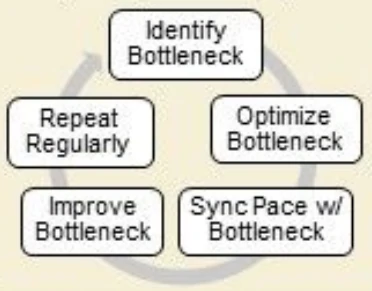
- Goldratt’s Theory of Constraints (For leader)
- The Pareto Principle
- Kanban Board
- The 1-3-5 Technique
- MIT: Most Important Task
How do you prioritize tasks when everything seems urgent?
categorize tasks based on their impact on deadlines and overall project. Anything that’s critical always takes priority, then anything with upcoming deadlines, and then tasks that can be “Send rescheduled without affecting the flow of the project.”
This structured approach ensures that the most vital aspects of the project stay on track without sacrificing quality and it keeps the team focused on the things that truly.
Key Point
Before you start prioritizing, make sure you have clear goals. Personal, team, or entire organization — knowing your goals helps you focus on what truly matters.
Create a master task list with all your to-dos.
Do a brain dump of all the tasks you need to complete across all your projects. Break down bigger tasks into smaller sub-tasks.
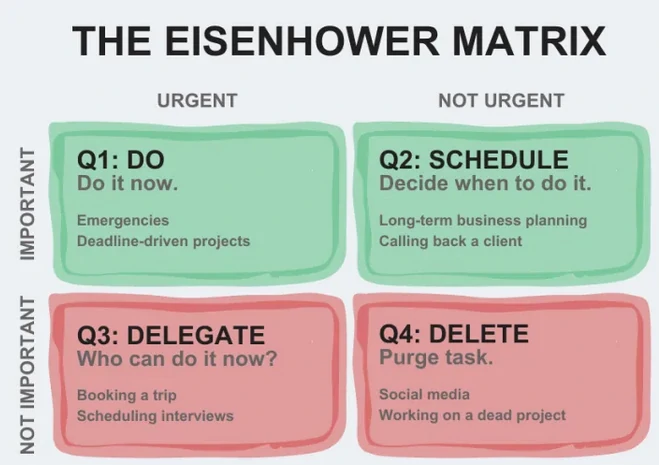
The Eisenhower Matrix (For Individuals)
Tip: List everything you need to do. Get it all out of your head. Organize it in a single place. You’re now ready to use methods to sort and prioritize it.
I have two kinds of problems, the urgent and the important. The urgent are not important, and the important are never urgent. - US President Dwight Eisenhower
Here’s how to prioritize tasks using the Eisenhower Matrix: Evaluate each task based on its urgency and importance. Then, insert each of your tasks into one of four quadrants:
- Q1: Urgent and Important. Tasks that need your action right away. Examples: important meetings and emails, deadline-driven projects, and pressing clients
- Q2: Non- mission, values, and goals. Examples: strategic planning, recruiting, and self-improvement
- Q3: Urgent and Unimportant. These grab your attention, so are easily mistaken as important – but you have better things to do. Examples: booking a trip, scheduling interviews, some phone calls and meetings
- Q4: Non-Urgent and Unimportant. Total time-wasters. Examples: pointless emails and business trips, aimless web browsing, or working on a dead project
To each quadrant corresponds an action:
- Q1: Do it now
- Q2: Schedule these tasks into your calendar
- Q3: Delegate to a member of your team
- Q4: Delete
The MoSCoW Method (For Teams)
Tip: Gather all tasks from your team members into a shared space, like a PM app. Now you’re set to use methods to prioritize together.
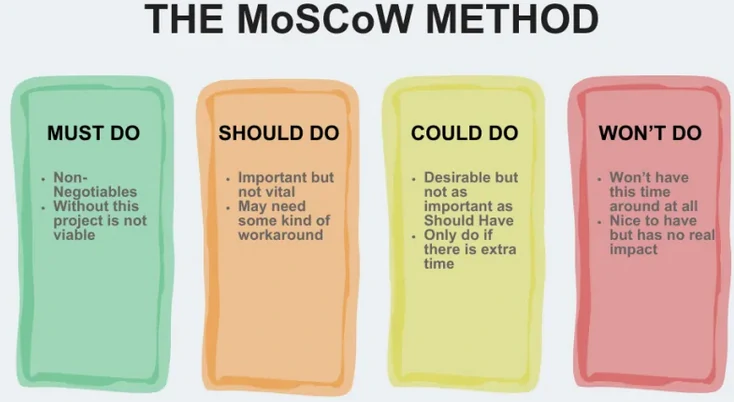
The MoSCoW method is a simple prioritization technique that divides your tasks into 4 buckets. Assign every task on your to-do list to one of four categories:
- M – Must do. Tasks you absolutely have to do. They must be completed before moving on to others
- S – Should do. Tasks you should do, but they’re a lower priority than M tasks. They are important but not critical to the project’s success
- C – Could do. Nice-to-dos. You’d like to do them, but if you don’t, it’s probably not a big deal
- W – Won’t do. Tasks that just aren’t worth doing
After you’ve assigned each task to a category, delete your W tasks. You won’t need them. Your tasks list should be a lot shorter now.
Focus first on M tasks, followed by S tasks. And, if you have time, move on to your C tasks. By working on your list from the top down, you’re always working on your highest-priority tasks.
RICE Method (For Teams)
Tip: Gather all tasks from your team members into a shared space, like a PM app. Now you’re set to use methods to prioritize together.
Score tasks with formula:
(Reach x Impact x Confidence) / Effort
Higher score = Higher priority
- R = # people it’ll affect
- I = How much it’ll help
- C = How sure you are
- E = How hard it’ll be
The ABCDE Method (For Teams)
Tip: Gather all tasks from your team members into a shared space, like a PM app. Now you’re set to use methods to prioritize together.
if you have a lot of tasks that need delegation, use the ABCDE method.
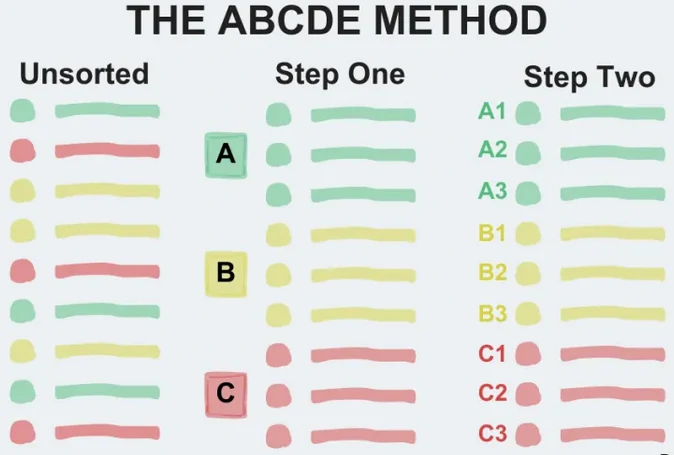
The ABCDE method comes from Eat That Frog by Brian Tracy. Here’s how to prioritize your tasks using the ABCDE method: First, assign a letter value to each task on your master list according to its level of importance:
- A – tasks you must do. They are the top priority
- B – tasks you should do. They are high-priority
- C – nice-to-dos. They are medium-priority
- D – tasks you should delegate to someone else. They are low-priority
- E – tasks you should drop. They are not a priority
Then, go through your A tasks and assign it a number:
- A1 – the highest priority task
- A2 – the second most important task
- A3 – the third most important task
Repeat until all tasks have letters and numbers. This is the order in which you’ll do your tasks.
It takes into account that different tasks can take the same priority level. But by using the second layer of prioritization, their true importance becomes much clearer.
This ranking helps understand expectations and provides a clear roadmap for tackling tasks. And while it doesn’t account for urgency, you can consider it when deciding how important a task is.
Warren BUffett’s 5/25 Method (For leader)
Tip: Collect all key projects, objectives, and KPIs critical to your org. Arrange them in a dashboard. This will help you steer priorities and guide your team.
- List your top 25 initiatives
- Rank them by importance
-
Split the list: Top 5 Others - Do the top 5
- Avoid the others at all cost
- When finished with 5, start over
$10K Work (For leader)
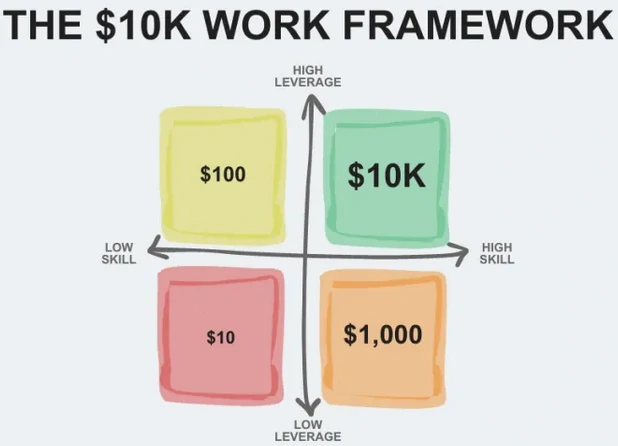
The $10K framework is a simple process of identifying your highest-leverage tasks. Here’s how to prioritize tasks using the $10K framework:
Grab your master task list and insert each task into one quadrant:
- $10 work. Replying to emails (getting to inbox zero), some meetings, or talking to unqualified prospects
- $100 work. Outsourcing simple tasks (that you should automate), or listening to an audiobook from your industry
- $1.000 work. Planning and prioritizing your day, delegating complex tasks, or acquiring a unique skill
- $10K work. Recruiting for a senior position, implementing systems and SOPs, selling to high-value customers.
Goldratt’s Theory of Constraints (For leader)
Fix the slowest part of a system to speed up the whole system.
The Pareto Principle
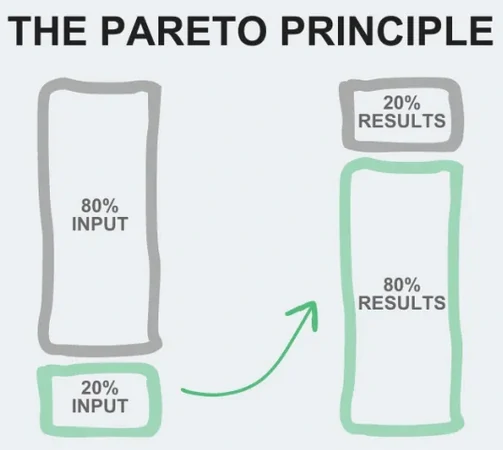
The Pareto Principle states that 80% of the output or results will come from 20% of the input or action. It’s also known as the 80/20 rule.
It disregards task urgency and importance to focus on output and performance.
To apply the Pareto Principle to prioritize your tasks, find the tasks that bring the bulk of the results. Then focus on those tasks.
Steps:
- Pick one goal.
- Look at your master list, go through each item, Does this task bring me closer to my goal? Answer yes or no for each item.
- Then, for each “yes” task, assign it a value from 1 to 10. 1 being “little impact on your goal” and 10 being “the biggest impact on your goal”.
- Got, the 3 tasks with the biggest number are your high-impact tasks.
- Now, it’s time to focus your deep work sessions on those 3 tasks—and those 3 tasks only. You shouldn’t be working on anything else until you complete them.
Kanban Board
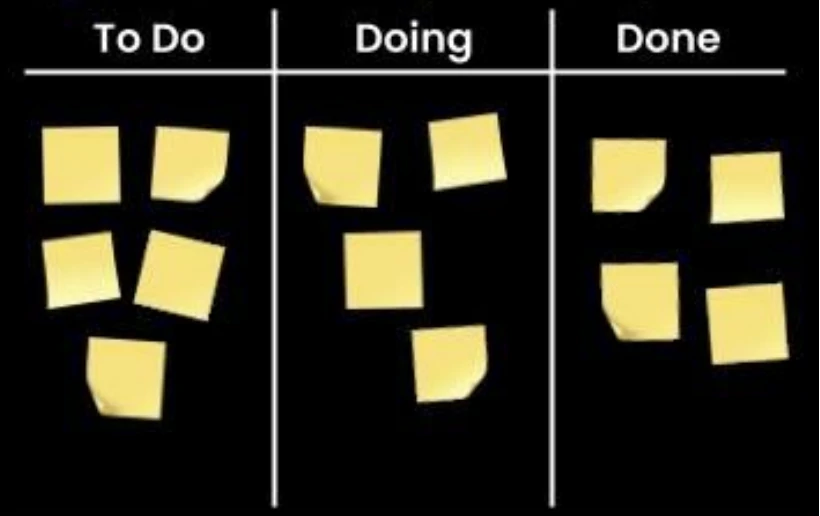
Organize & coordinate your team’s priorities
The 1-3-5 Technique
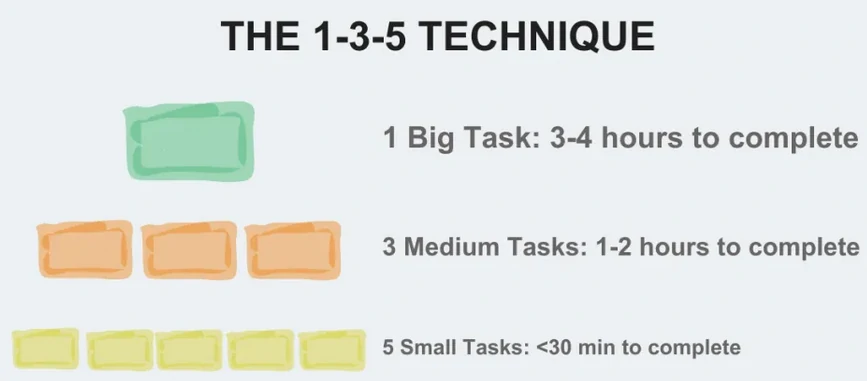
The 1-3-5 prioritization technique is one of the simplest ways to tackle your task list. It forces you to focus on important tasks. But it also gives you a framework to prioritize the less important tasks you need to work on.
Here’s how to prioritize tasks using the 1-3-5 technique:
- Go into your master task and group them into big, medium, and small tasks. The criteria you’re considering is time.
- As a rule of thumb, consider:
- Big Tasks take anywhere from 3 to 4 hours to complete
- Medium Tasks can take about 1-2 hours
- Small Tasks may take less than 30 minutes to an hour each
- Then every day, choose 9 tasks from your master task list:
- 1 big task
- 3 medium tasks
- 5 small tasks
- Finally, order your lists of 3 important tasks and 5 nice-to-do tasks by priority.
- Start your day by working on your biggest task. This will help you get momentum to finish the rest of the tasks on your 1-3-5 list.
MIT: Most Important Task
A Most Important Task (MIT) is a critical task that creates the most significant results. It’s the task that you most want or need to get done today.
Here’s how to prioritize your tasks using the MIT method:
- Every day, write down 2-3 MITs on an index card.
- Have at least one of your MITs related to your goals. While the other two can be work stuff, one must be a goal action.
- Then, focus on getting your MITs done as soon as possible. It doesn’t matter what else you do that day, you need to complete your 2-3 MITs.
- Set an artificial deadline to have your MITs complete. Say, “I’ll have done my MITs today by 11 am”.
- It also gives you an excuse to say no to interruptions.
- Achieve your MITs as quickly as possible, and you’ve already won the day. You have the rest of the day to handle anything else that comes up.