Data Warehouse 101
data Strategic
data warehouse
design patterns
What is a Data Warehouse?
A centralized repository of integrated data from multiple sources, structured for query and analysis rather than transaction processing.
Key Characteristics
- Subject-oriented: Focused on business subjects like sales, marketing
- Integrated: Consistent naming, measurement, encoding
- Time-variant: Historical data for trend analysis
- Non-volatile: Data is stable and read-only
OLTP vs OLAP
| Dimension | OLTP Online Transaction Processing | OLAP Online Analytical Processing |
|---|---|---|
| Purpose | Operational tasks, transaction processing | Business intelligence, decision support |
| Data Structure | Normalized, entity-relationship model | Denormalized, star/snowflake schema |
| Users | Front-line workers, clerks, cashiers | Knowledge workers, analysts, managers |
| Operations | Simple, read/write operations | Complex, read-only queries |
| Response Time | Milliseconds - immediate | Seconds to minutes - analytical |
| Database Design | Application-oriented | Subject-oriented |
| Data Volume | GBs of current data | TBs to PBs of historical data |
| Examples | ATM, Order entry, POS systems | Financial analysis, sales forecasting |
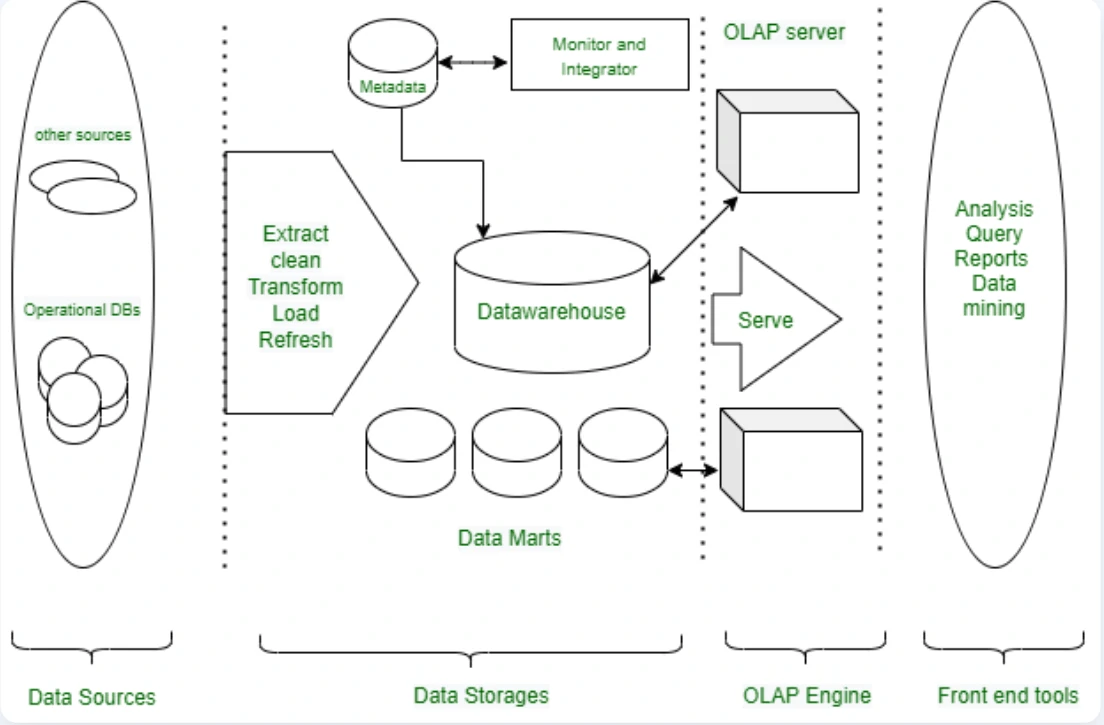
Data Warehouse Architecture
Data Warehouse Components
- Components
- Source Systems
- ETL/ELT
- Staging Area
- Data Warehouse
- Data Marts
| Dimension | Traditional Architecture | Modern Architecture |
|---|---|---|
| Processing | ETL (Extract, Transform, Load) | ELT (Extract, Load, Transform) |
| Storage | On-premise hardware | Cloud-native services |
| Data Model | Structured schemas | Flexible (structured + semi) |
| Updates | Batch processing | Real-time streaming |
| Access | Limited to BI tools | Multiple interfaces (APIS, SQL) |
Data Warehouse schema types
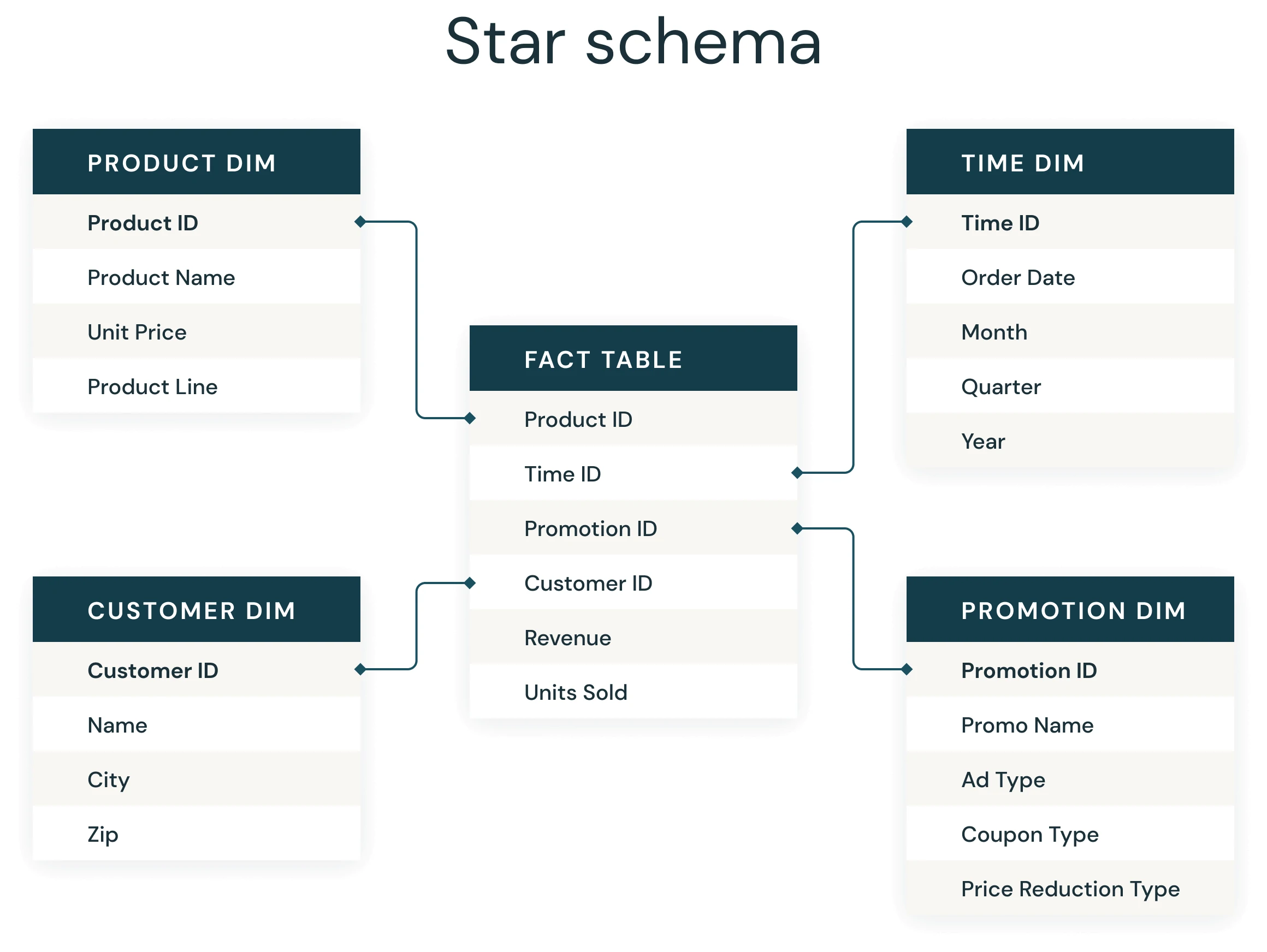
- Star Schema
- Central fact table with dimension tables
- Denormalized dimension tables
- Simple structure, fast queries
- Best for Simple analytics
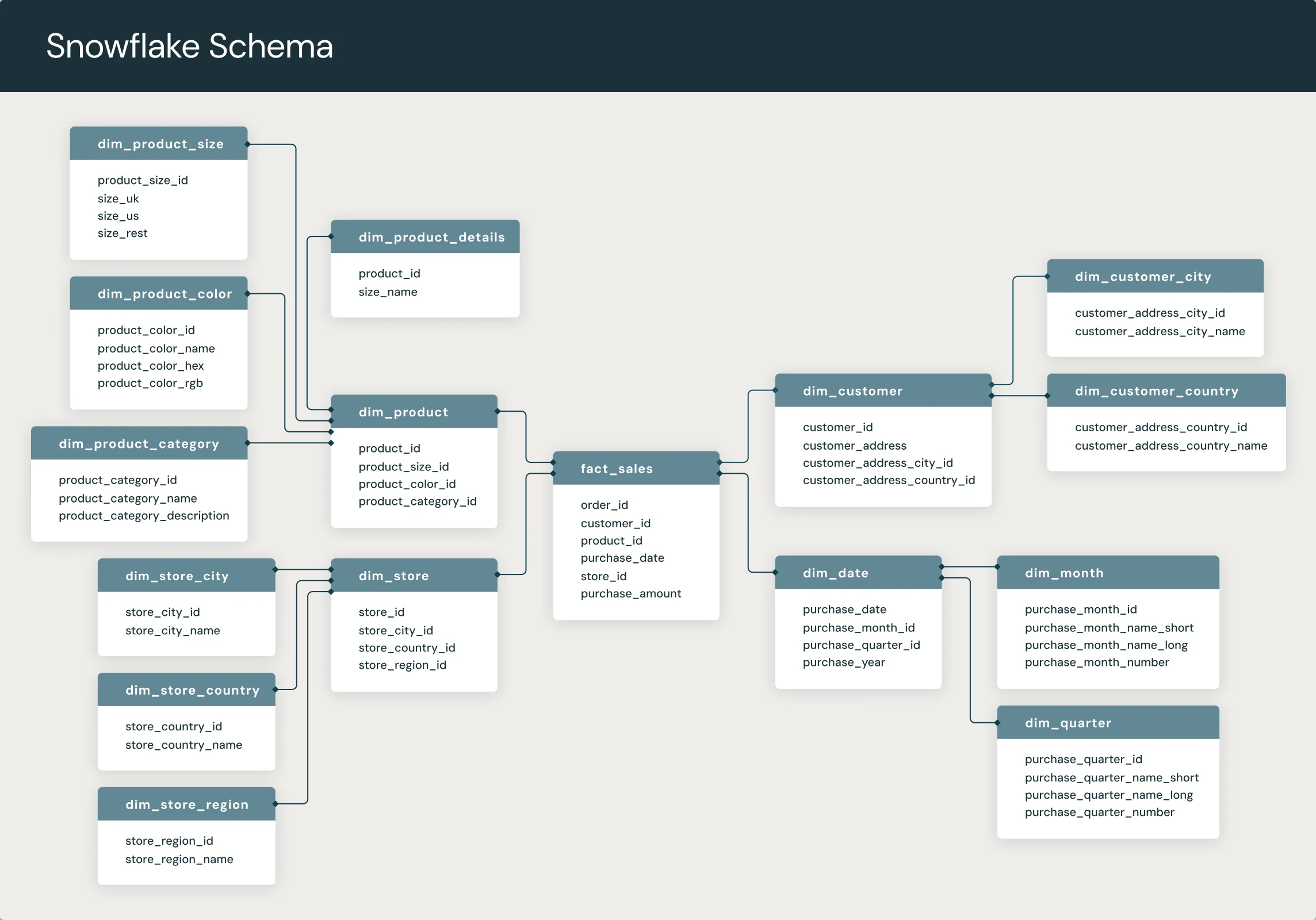
- Snowflake Schema
- Normalized dimension tables
- Reduced redundancy, complex structure
- Better for maintenance
- Best for Complex dimensions
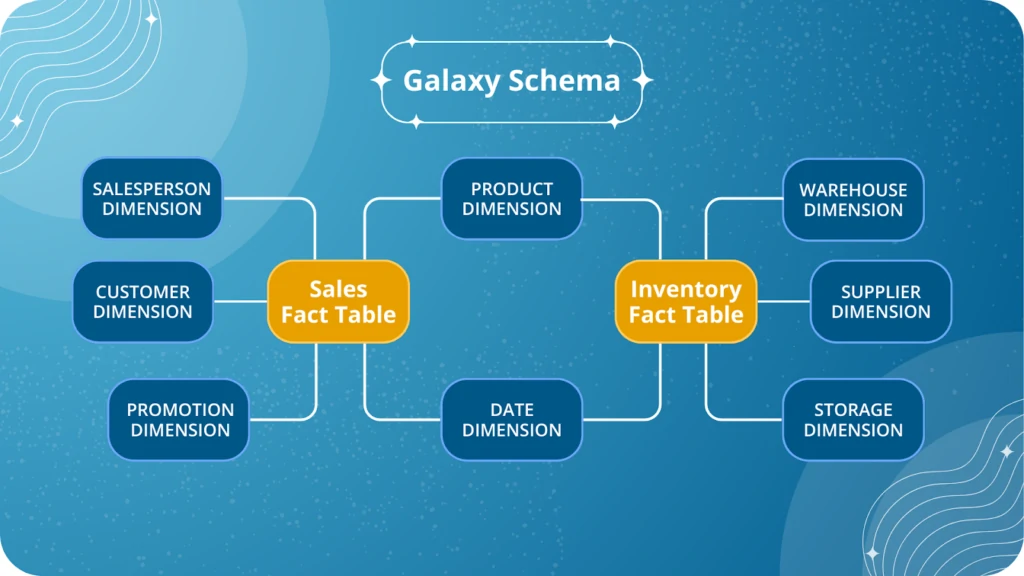
- Galaxy Schema
- Multiple fact tables sharing dimensions
- Supports complex business models
- Also called Fact Constellation
- Best for Enterprise-wide
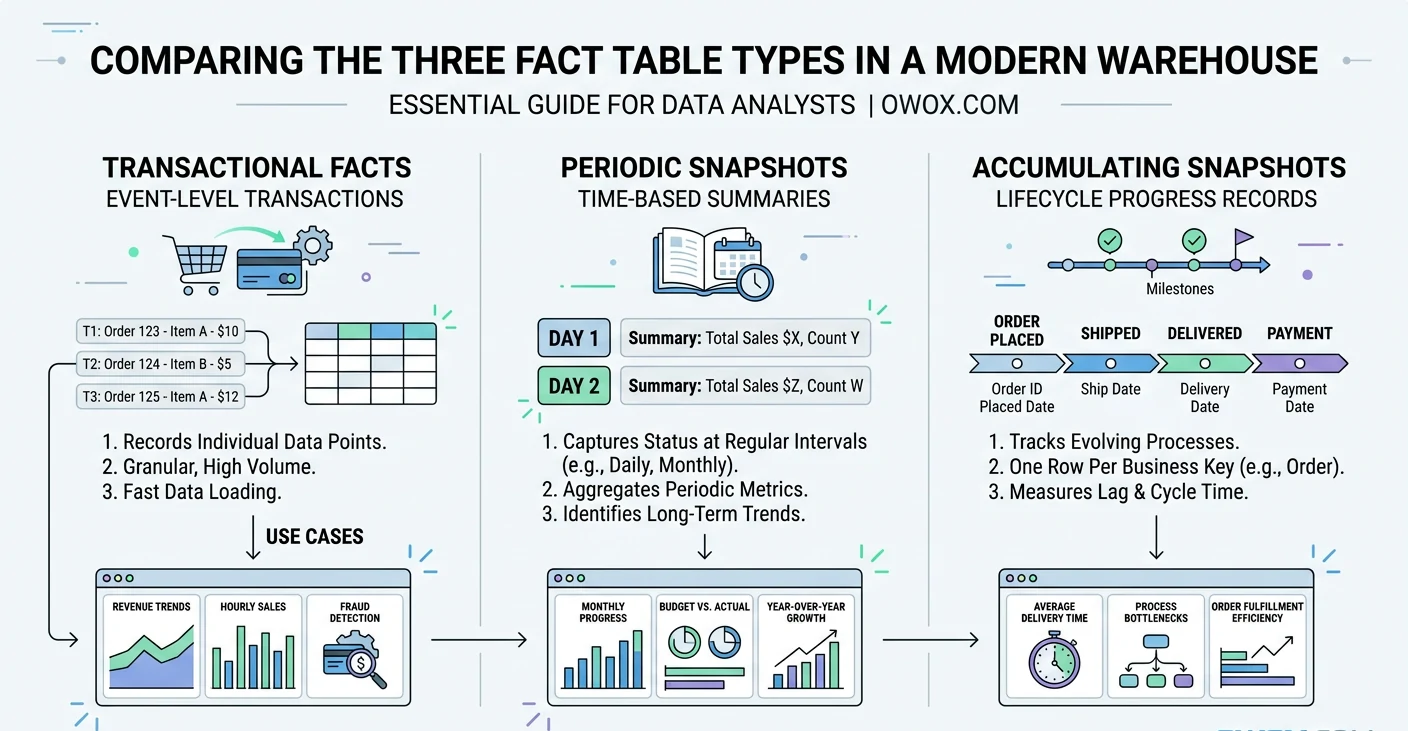
Fact Table Types
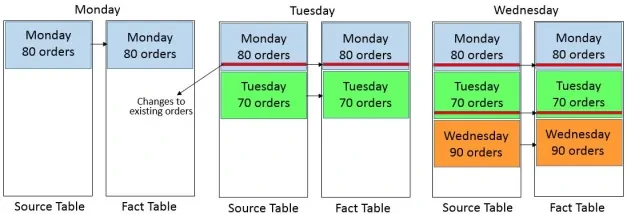
- Transactional Fact Table
- Records individual transactions
- Captures at the lowest grain
- Most common fact table type
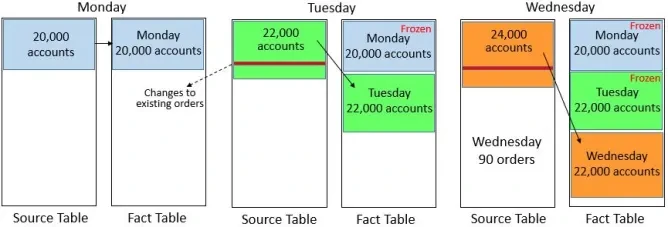
- Periodic Snapshot Fact Table
- Captures state at regular intervals
- Contains semi-additive measures
- Good for trend analysis
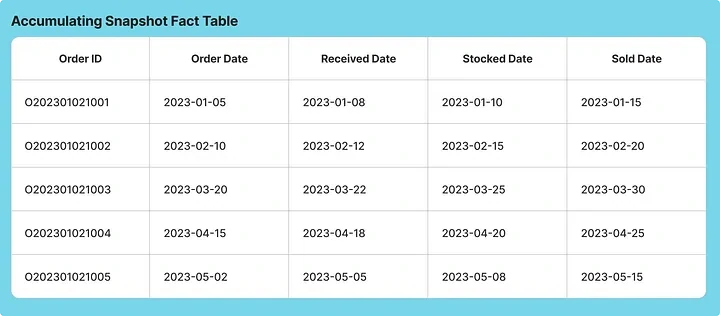
- Accumulating Snapshot Fact Table
- Tracks process milestones
- One row per business process
- Updated as process evolves
Slowly Changing Dimensions (SCD) Types
ETL vs ELT
ETL (Extract - Transform - Load)
- Key Characteristics
- Transforms data before loading
- Processing in separate server
- Better for complex transformations
- ETL Preferred
- Complex transformations before loading
- Legacy systems integration
- Strict data quality requirements
- Regulatory compliance needs
ELT (Extract - Load - Transform)
- Key Characteristics
- Transforms data after loading
- Processing in target system
- Better for large datasets
- ELT Preferred
- Big data volumes processing
- Cloud-native environments
- Real-time data needs
- Flexible analytics requirements
Hybrid Approach
- Mixed environments (on-prem + cloud)
- Multiple data types (structured + unstructured)
- Migration scenarios (gradual transition)
- Complex data pipelines with varied needs
Data Processing Concepts
- Data Pipelines
- Orchestrated data flow
- Automated data movement
- Components: Extract, Transform, Load
- Schema:
- Batch: Scheduled processing
- Streaming: Real-time processing
- Micro-batch: Small frequent batches
- Batch vs Real-time Processing
- Batch processing
- High throughput
- Lower cost
- Complex transformations
- Real-time Processing
- Low latency
- Immediate insights
- Event-driven
- Batch processing
- Lambda & Kappa Architecture
- Lambda
- Dual paths: batch + speed layer
- Lambda: Complex, fault-tolerant
- Kappa
- Single path: streaming only
- Kappa: Simpler, unified processing
- Lambda
- Data Ingestion Methods
- Push-based: Source sends data
- Pull-based: Destination fetches data
- Change Data Capture: Tracks changes
- API-based: REST/GraphQL endpoints
Data Quality & Governance
- Data Profiling
- Data assessment
- Analyzing data to discover content, structure, and relationships to identify quality issues
- Data Validation
- Quality assurance
- Ensuring data meets business rules and requirements through automated checks
- Data Cleansing
- Error correction
- Correcting or removing or inaccurate, incomplete, or inconsistent data
- Metadata Management
- Data documentation
- Data Managing about data, to provide context, meaning, and usability
- Data Lineage
- Data provenance
- Tracking data origin, movement, and transformation throughout its lifecycle
- Master Data Management
- Data consistency
- Creating a single source of truth for criticalbusiness data
Storage & Query Optimization
- Partitioning
- Faster query scans
- Dividing large tables into smaller, manageable parts based on specific criteria
- Columnar Storage
- Ideal for aggregation queries that access few columns across many rows
- Storing data by column rather than row to improve analytical query performance
- Indexing
- Reduced I/O operations
- Creating data structures for faster data retrieval without scanning entire tables
- Query Pushdown
- Minimized network overhead
- Moving computation closer to data to reduce data transfer and improve performance
- Materialized Views
- Instant complex queries
- Pre-computed query results stored as physical objects for faster access
Performance Tuning Concepts
- Caching
- Store frequently accessed data in memory
- Result set and metadata caching
- Automatic cache invalidation
- 10-100x faster queries
- Clustering
- Physically organize data based on query patterns
- Co-locate related data together
- Automatic re-clustering maintenance
- Reduced I/O operations
- Compute Scaling
- Adjust resources based on workload
- Vertical scaling (bigger nodes)
- Horizontal scaling (more nodes)
- Cost-performance balance
- Query Execution Plans
- Visualize query processing steps
- Identify bottlenecks and inefficiencies
- Cost-based optimization
- Strategic query optimization
Modern Data Architecture Trends
- Lakehouse Architecture
- combines data lake & warehouse
- Single copy of data for multiple uses
- Supports BI & ML workloads
- Delta Lake
- Brings ACID transactions to data lakes
- Time travel & version control
- Handles streaming & batch workloads
- Fabric Warehouse
- Microsoft’s unified analytics platform
- Integrates Power BI, Synapse, Data Factory
- OneLake for all data
Emerging Data Architecture Patterns
- Data Mesh
- Decentralized data ownership
- Domain-oriented data products
- Self-serve data platform
- Medallion Architecture
- Bronze: Raw data layer
- Silver: Cleansed & validated
- Gold: Business-ready tables
- Reverse ETL
- oves processed data back to operational systems
- Enables actionable insights in business tools
- Creates data-driven workflows