Discover Your Product Vision
Product
Vision
Discover

What is (Product) Vision?
inspiring statement that outlines the long-term goals and aspirations for a product. Serves as a guideline for the development team, stakeholders, and the entire organization, providing a clear direction for the product’s future.
A well-crafted product vision typically includes the following elements:
- Purpose: Articulates the fundamental reason for the product’s existence
- Values: Include core values or principles that the product team and organization own.
- Target Audience: Defines the primary users the product aims to serve.
- Differentiation: Highlights what sets the product apart from competitors
- Long-Term Goals: Outlines the desired state or impact the product should achieve in the distant future
- Inspiration: It should inspire and motivate the product team
Example
To create an integrated operations management platform that revolutionizes how businesses handle logistics, inventory, and customer service, driving unparalleled efficiency, cost savings, and customer satisfaction.
- Purpose: Streamline and optimize various operational processes. Aim to address the challenges businesses face in these areas.
- Values: Emphasize values such as efficiency, transparency, and farmer-centric.
- Target Audience: The primary users are businesses of all sizes, looking to enhance their operational efficiency.
- Differentiation: Providing an all-in-one solution that seamlessly integrates multiple facets of operations.
- Long-Term Goals: Become the preferred operations management platform for businesses globally.
- Inspiration: Envisioning a future where businesses can focus on growth and innovation while leaving the complexities of operations to us.
Why is a Product Vision Important?
Essential for guiding product development, fostering teamwork, and ensuring that the product remains relevant, valuable, and competitive in the market.
- Provides Direction: Serves as a North Star for the entire team
- Alignment: Aligns the efforts of cross-functional teams to reduces conflicts and ensures that everyone is working toward the same goal.
- Inspiration: Inspires and motivates the team
- Prioritization: Helps in prioritizing features and initiatives when faced with choices
- User-Centricity: Focuses on solving real user problems or meeting their needs.
- Differentiation: Set a product apart from competitors
- Flexibility: Allows for adaptability
- Communication: As a communication tool both internally and externally.
- Risk Mitigation: Reduces the risk of making decisions that don’t align with the product’s overall strategy.
- Sustainability: Help sustain the product over the long term. Prevents the team from chasing short-term trends.
How to Find Your Product Vision?
Market Research
- Identify Your Target Market: Understand their demographics, preferences, and pain points.
- Study Industry Trends: Identify opportunities and threats that could impact your product.
- Competitor Analysis: Identify gaps in the market that your product could fill or areas where you can differentiate.
- Market Size and Growth: Assess the size of your target market and its growth potential. Consider whether it’s a niche market or a broader audience.
Customer Feedback
- Conduct Surveys: Create and distribute surveys to gather quantitative data on customer preferences, needs, and pain points.
- Customer Interviews: Conduct one-on-one interviews with existing and potential customers to gain qualitative insights into their experiences and expectations.
- Feedback Analysis: Analyze customer support inquiries, product reviews, and social media mentions to understand recurring issues and customer sentiment.
- User Testing: If applicable, conduct usability testing with actual users to identify usability issues and gather feedback on the user experience.
Team Brainstorming
- Assemble a Cross-Functional Team: Bring together a diverse team of individuals from different departments.
- Define Objectives: Clearly outline the goals of the brainstorming session.
- Idea Generation: Encourage team members to brainstorm ideas freely.
- Prioritization: After generating ideas, prioritize them based on feasibility, alignment with goals, and potential impact on the product.
- Refinement: Refine the most promising ideas into a cohesive product vision.
Then, How?
- Synthesize Findings: Combine the insights & look for common themes and opportunities.
- Craft a Vision Statement: Create a concise and inspiring product vision statement that reflects what your product aims to achieve, who it serves, and how it differentiates itself.
- Test and Iterate: Share the vision statement with your team and gather feedback until it resonates with all stakeholders and accurately represents the product’s direction.
- Communicate and Align: Share the final product vision statement with your entire organization. Ensure that everyone understands and is aligned with the vision’s purpose and direction.
How about Roadmap?
- Define Clear Goals
- Identify Objectives: Begin by understanding the overarching goals for your product.
- Quantify Goals: “Increase monthly active users by 20% in the next six months.”
- Gather Input from Stakeholders
- Collaborate Cross-Functionally: Involve stakeholders from various departments to gather input on priorities.
- Customer Feedback: Consider customer feedback and insights gained from user research to identify pain points and feature requests.
- Prioritize Features
- Use a Framework: Choose a prioritization framework that suits your product and goals.
- Rank Features: List all potential features and enhancements, and rank them based on the chosen prioritization criteria.
- Set Timelines
- Assign Dates: Attach estimated start and end dates to each phase or release.
- Consider Dependencies: Be mindful of feature dependencies, where one features completion may affect others.
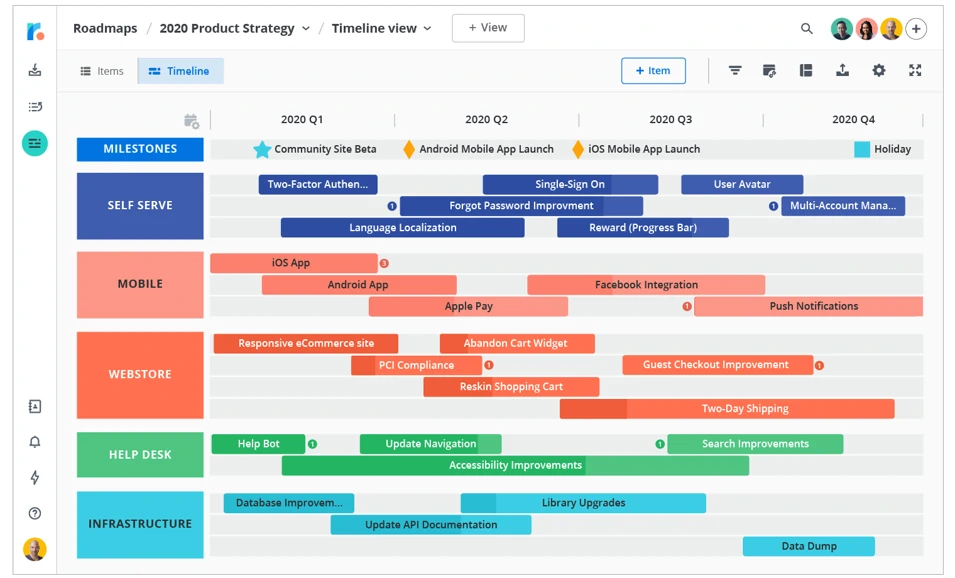
- Create a Visual Roadmap
- Choose a Format: Select a format for your roadmap, whether it’s a Gantt chart, Kanban board, or a simple timeline.
- Segment Phases: Divide your roadmap into time-based phases or releases, such as quarterly or monthly increments.
- Visualize Priorities: Highlight the most important features or initiatives on your roadmap, making it easy for stakeholders to understand what’s coming next.
- Communicate and Iterate
- Share the Roadmap: Communicate the roadmap with your team and relevant stakeholders.
- Collect Feedback: Encourage feedback and input from team members and stakeholders.
- Iterate Regularly: Roadmaps are not static.
- Monitor Progress
- Track Milestones: Monitor progress by tracking milestones and completion of planned features.
- Adjust as Needed: Be prepared to adjust the roadmap accordingly. Flexibility is key to successful roadmap management.